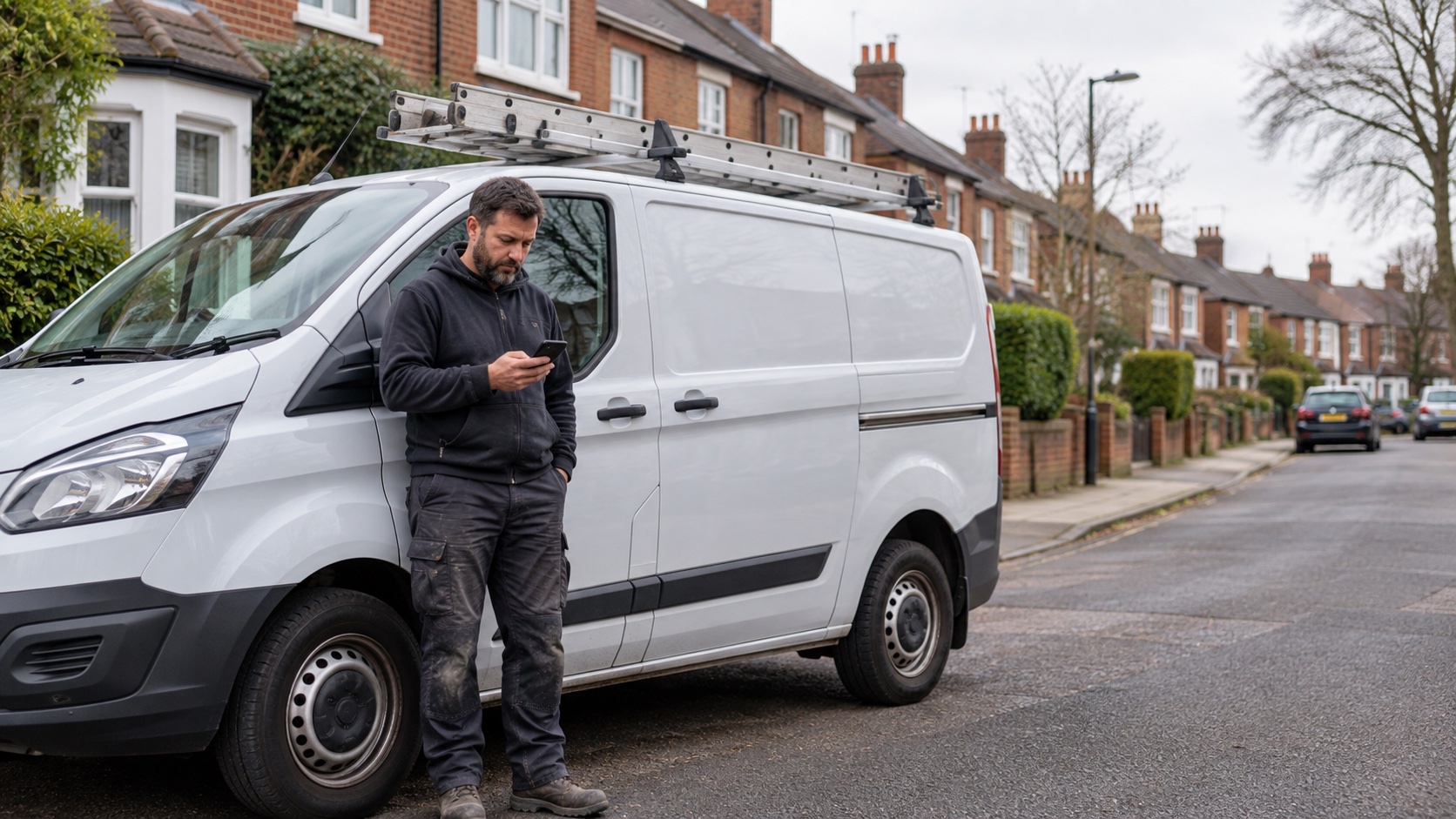
Most local service businesses don't have a marketing department. They have a van, a phone, a reputation, and whatever time is left after the actual work.
If that sounds familiar, you don't need a complicated growth plan. You need a few habits that bring in better local enquiries — without burning money on every lead offer that lands in your inbox.
It works the same for plumbers, electricians, cleaners, photographers, builders, gardeners, tutors, and other local service businesses.
Start with what people already check
When someone nearby needs help, they usually do one of three things: ask a friend, search on their phone, or message a business they've used before.
So before you spend on ads, make those paths easier.
Make your Google Business Profile useful
If you only do one marketing task this month, do this.
- Keep your categories accurate
- Set the areas you actually cover
- Add real photos of your work (not just a logo)
- Write a short description in plain English
- Keep opening hours up to date
- Turn on messaging if you can reply
A half-finished profile quietly loses work to whoever looks more organised.
Ask for reviews in a normal way
Good reviews aren't about chasing vanity scores. They're proof for people who've never met you.
The simple approach works best:
- Do the job well
- When the customer is clearly happy, ask
- Make it easy — send the link
- Say thank you when they leave one
Don't invent reviews. Don't pay for five stars. It isn't worth the risk, and people can usually tell.
Show what you actually do
"Quality service at competitive prices" helps nobody. Photos and short examples do.
Useful proof looks like:
- Before and after photos
- A short note about the type of job
- The area, if relevant
- What made the job fiddly, if that's your strength
You don't need a glossy brochure. You need evidence that you've done the kind of work someone is about to ask for.
Reply quickly — and sound like a person
Speed matters more than most local businesses admit. If someone has messaged several firms, a clear, helpful reply can make a big difference.
A good first response usually covers:
- Yes, you do that kind of job (or no, with an honest redirect)
- When you could look at it
- What you need from them (photos, address, timing)
- A rough sense of next steps
You don't have to quote in thirty seconds. You do have to show you're paying attention.
WhatsApp is well suited to this. Keep the chat tidy, save useful photos, and don't leave people on read for two days unless you're away and your auto-reply says so.
Make contact easy in general: a clear phone number, a reachable WhatsApp, and a short note on your profile about how you prefer to be contacted.
Be clear about where you work
"Covering the whole region" sounds big. It also attracts enquiries you'll never take.
List the towns or postcode areas you genuinely want. Update the list when your diary changes. Turning down distant jobs gets easier when your public profile doesn't invite them in the first place.
Set expectations early
A lot of wasted time is mismatched expectations.
Be plain about:
- Call-out fees, if you charge them
- Minimum job sizes
- Typical lead times
- What you don't do
Clear boundaries attract better customers. The ones who only want the impossible usually move on — which is a win.
Follow up without becoming a nuisance
If someone asked for a quote and went quiet, one polite follow-up a few days later is reasonable. Several chase messages in 48 hours is how you earn a silent block.
A simple message works:
"Just checking you got the quote — happy to adjust the scope if the budget's tight."
Then leave the door open.
Ask happy customers for referrals
Referrals can be one of the most valuable sources of local work. People trust a name from a neighbour more than a stranger's advert.
When a job goes well, say:
"If you know anyone else who needs this, I'd be grateful if you passed my number on."
Some businesses leave a small card. Some just rely on being memorable and easy to contact. Either way, ask while the good result is fresh.
Use local Facebook and community groups carefully
Local groups can bring work. They can also eat your evening.
A few rules that keep you sane:
- Help first; pitch second
- Don't spam every recommendation request with a copy-paste advert
- Answer in the areas you actually cover
- Take the detailed chat to WhatsApp or phone
People hire the business that sounds competent and civil in public.
Treat paid lead offers with healthy scepticism
You'll be approached by people promising a flood of leads. Some are useful. Many are expensive lists of half-interested enquiries.
Before you pay for any lead service, ask:
- Are the leads exclusive, or shared with several other firms?
- Which areas and job types are included?
- What happens when the enquiry is rubbish?
- Can you pause when you're booked up?
A relevant enquiry is worth more than twenty vague ones. Busy wrong work still costs you — fuel, time, and diary space you could have offered to a better-fit customer.
Price clearly, even when it feels awkward
Customers aren't only comparing price. They're comparing certainty.
Wherever you can:
- Explain what's included
- Separate optional extras
- Put the quote in writing
- Say how long the price holds
You can still be competitive. Clarity just stops the job dying in a fog of "we'll confirm on the day."
Reliability is marketing
Showing up when you said you would, tidying up, and doing what you promised is good marketing too — even if it doesn't look like marketing.
In a local market, reputations move fast. The tradesperson who rings if they're stuck in traffic gets recommended. The one who vanishes mid-job gets discussed too — for different reasons.
A light weekly rhythm
If marketing only happens when work is quiet, you'll always be catching up. Keep it light:
- Add two or three real job photos to your profile
- Ask for a review after good jobs
- Reply to new enquiries the same day where you can
- Check your Google profile details once a month
Small and consistent beats occasional panic.
If you want another route to local enquiries
ASKU is for the gap between "I need someone local" and "who's free and relevant?" Customers tell us what they need on WhatsApp. We help connect them with local professionals for that job.
If you want another source of relevant local enquiries — without pretending it's magic — you can join ASKU and see whether it fits the way you already work.