Why Small Jobs Often Cost More Than They Seem
Small jobs—like fixing a leaking tap, replacing a door handle, or patching a small wall—can feel straightforward. But they often carry hidden costs. Travel time, setup, tools, and materials add up quickly. A job that takes 30 minutes on-site might require two hours of prep and travel. If you quote only for the time spent on the job, you’ll lose money.
The real cost isn’t just labour. It’s the opportunity cost of being away from a larger job, the wear on your van, and the administrative work behind the scenes. Without a clear pricing strategy, small jobs become unprofitable.
Build Your Quote Around Scope, Not Just Time
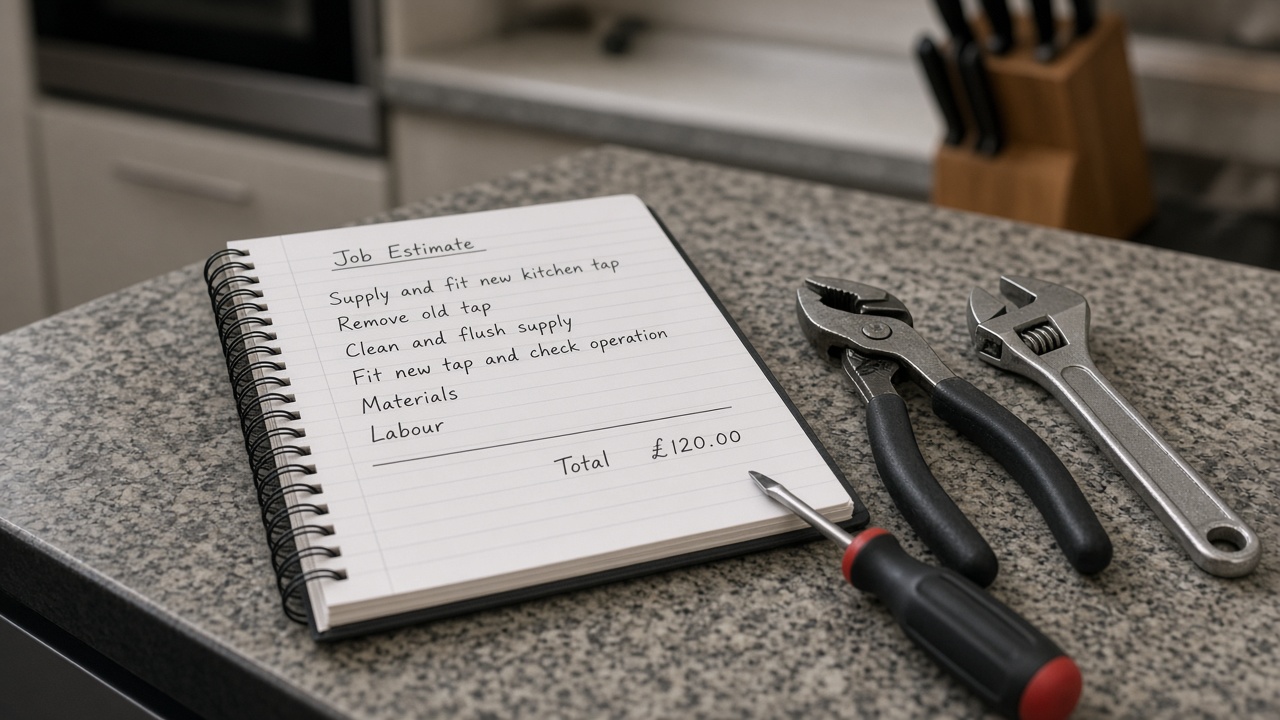
Start by defining the scope clearly. A quote for a leaking tap isn’t just ‘fix tap’. It’s:
- Identify the leak source
- Remove old washer
- Replace with correct washer
- Test for leaks
- Clean up
If the job includes replacing the tap body or checking pipes, that’s a different scope. Never assume the customer knows what’s involved. Write it out. Use bullet points. If the scope changes, so does the price.
This prevents scope creep—where the job slowly grows beyond the original plan. A simple tap fix becomes a full bathroom reseal, and you’re left with extra work and no extra pay.
Use a Minimum Charge and Callouts
Set a minimum charge for small jobs—say £40–£60. This covers your travel, setup, and time, even if the work takes 20 minutes. It’s not about the job’s size; it’s about your time and overhead.
If the job requires extra work not in the original scope, use a callout. For example:
- ‘Additional £25 to replace the tap body, as the original is corroded.’
- ‘£15 for a second visit to reseal the joint.’
Callouts should be clear, immediate, and agreed before work starts. Never surprise a customer with a surprise charge. A quick text or verbal confirmation works.
Avoid the Trap of Free ‘Quick Fixes’
Saying ‘I’ll just pop in and fix it’ sets a precedent. Customers start expecting free or low-cost fixes. Once you give one, they’ll expect more. This erodes your pricing power.
Instead, say: ‘I can check it for you, but I’ll need to quote properly based on what I find. I’ll send a quick estimate within the hour.’
This keeps you in control. It also builds trust—customers see you’re thorough, not just trying to upsell.
Use ASKU to Get Relevant Small Job Enquiries
If you’re struggling to find small jobs that pay fairly, consider how you’re visible. ASKU connects local trades with nearby customers who need reliable, properly priced work. It helps you attract jobs that respect your time and expertise—without the risk of underquoting.
You’re not just a fixer. You’re a professional. Let that show in your quotes, your communication, and your pricing.
Final Tip: Review Your Pricing Quarterly
Your costs change. Fuel prices rise. Tools wear out. Insurance goes up. Review your minimum charge and callout rates every few months. Adjust based on actual costs, not just what you think you should charge.
A small job isn’t a favour. It’s a service. Price it like one.